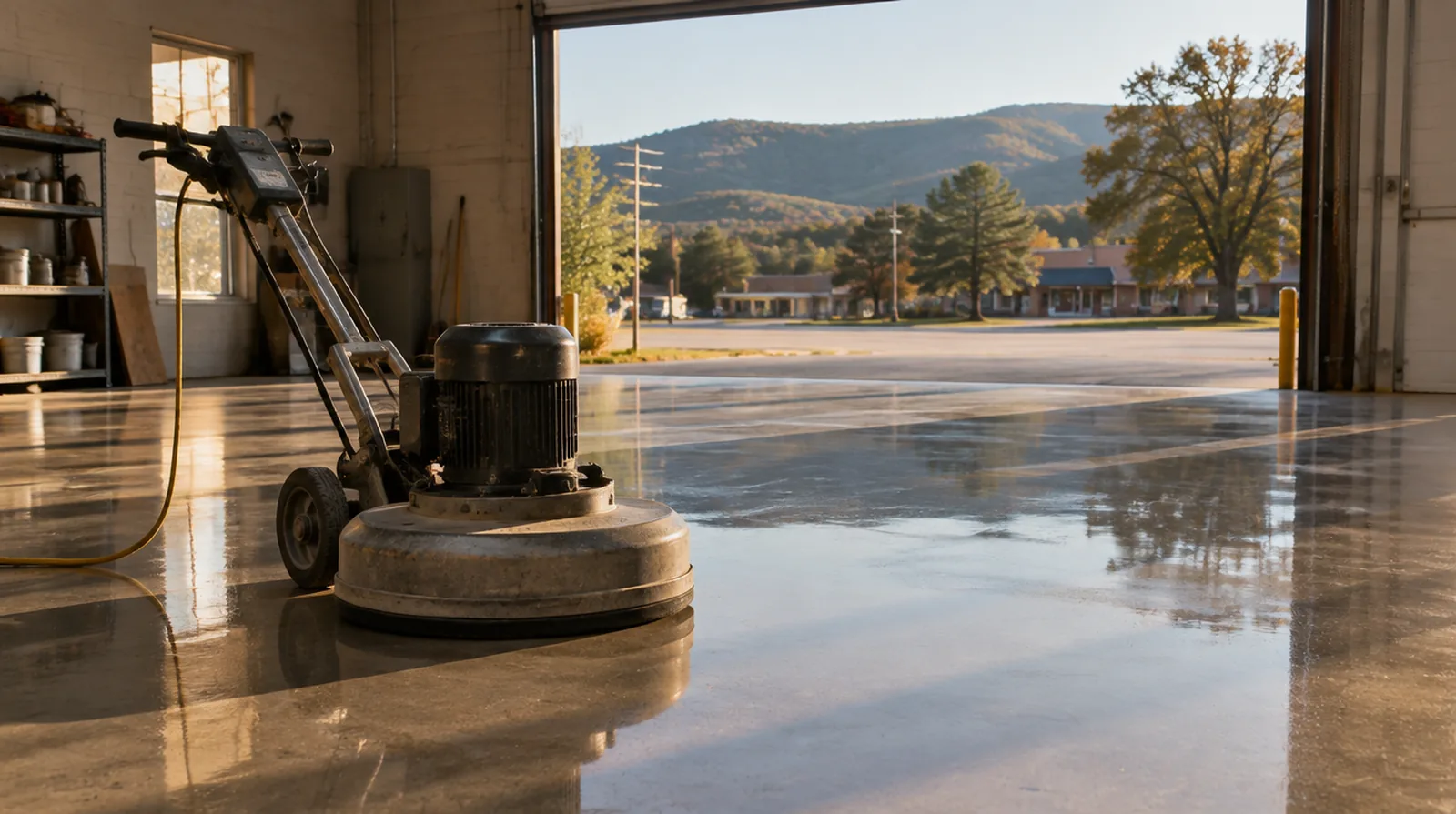
What happens
We grind with coarse diamonds to flatten the surface, apply a densifier that hardens the concrete, then step up through finer pads until we hit the sheen you want.
Is your slab a fit?
New or solid slabs polish best. Floors with deep cracks, heavy patching or glue may look patchy. We will tell you honestly at the estimate.
Upkeep
Dust mop and a neutral cleaner. A guard product helps against spills. If you want color or a softer feel, a coating may suit you better.
Gloss levels
Polished floors range from a low satin look to a high mirror shine. Satin is easier to keep looking even, and it hides scuffs better in busy rooms. High gloss looks dramatic in a showroom but shows wear sooner where traffic is heavy.
Polished concrete at home
It is less common in houses around Alma, but it suits a finished basement, a modern addition, or a shop with a living area. The floor stays cool in summer, and it never needs waxing or recoating like some finishes.
Polished concrete for Alma shops, barns and porches
Polishing works best on a slab that is reasonably flat and solid, which describes a lot of newer metal shop buildings and pole barns around Alma and out toward Dyer. There is no coating to peel, so it suits spaces where you want low upkeep and do not mind the natural gray tones and small marks of the concrete.
Steps in a polish job
We start with coarse metal-bond diamonds to open the surface, apply a densifier that hardens the top of the slab, then step up through finer resin pads until we reach the sheen you picked. A guard sealer goes on last to help resist stains.
Common questions
Will it show old patches? Yes. Polishing reveals the slab as it is, so patches and saw cuts stay visible. If that bothers you, a coating may be the better fit.
Is it dusty? Our grinders run with vacuums, so the dust is controlled, though we still ask you to cover anything stored nearby.
Can it be stained? A dye can be added before the final pads if you want a warmer tone than plain gray.
Upkeep after polishing
Dust-mop often, and wet-clean with a pH-neutral product. Grit is what dulls the sheen over time.
Polished floors for church halls and meeting rooms
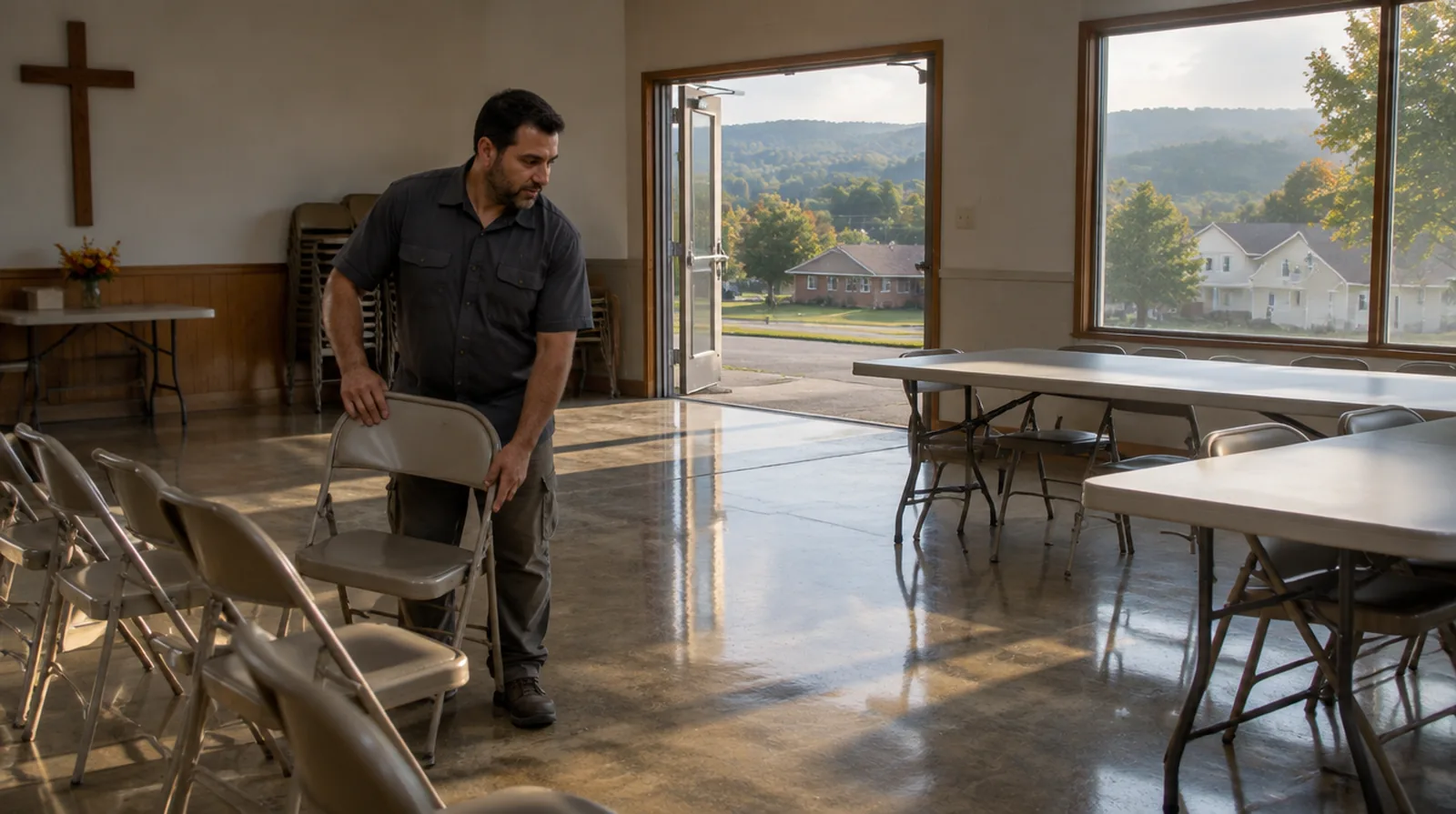
Fellowship halls, lodge rooms and community buildings around Alma see big crowds a few times a week and then sit quiet. They host potlucks, funeral dinners, Vacation Bible School and youth nights, so the floor takes spilled tea, dragged folding tables and a lot of foot traffic. Polished concrete is a good match for that kind of building. It has no coating to peel, it can be cleaned with a mop and plain water, and it brightens rooms that only have a few windows, like the hall in the photo.
Many of these buildings have old vinyl tile glued to the slab. We remove the glue, check the slab for cracks and patched areas, and let you know honestly if a patch will show through the polish before we start.
How a polish job runs
- Grind with coarse diamonds to cut through old glue and open the surface.
- Apply a densifier to harden the top layer of concrete.
- Work up through finer diamonds until the shine you chose is reached.
- Add a guard product that helps resist stains from drinks and food.
Polishing questions from Alma
Can we keep using the building during the job?
Usually we split the space into sections so one part stays open, but plan on a few days of disruption in the room being polished.
How do volunteers clean it?
A dust mop daily and a damp mop with a neutral cleaner after events. No wax, no stripping.
Will old tile glue lines show?
Faint lines sometimes remain. We grind test spots so you can see what to expect.
For church kitchens attached to a hall, we usually suggest a coating instead of polish, because grease and hot water are harder on bare concrete. We can do both rooms on the same schedule.
Thinking about polished concrete?
Call (479) 370-4896.