What wears out patios in Alma
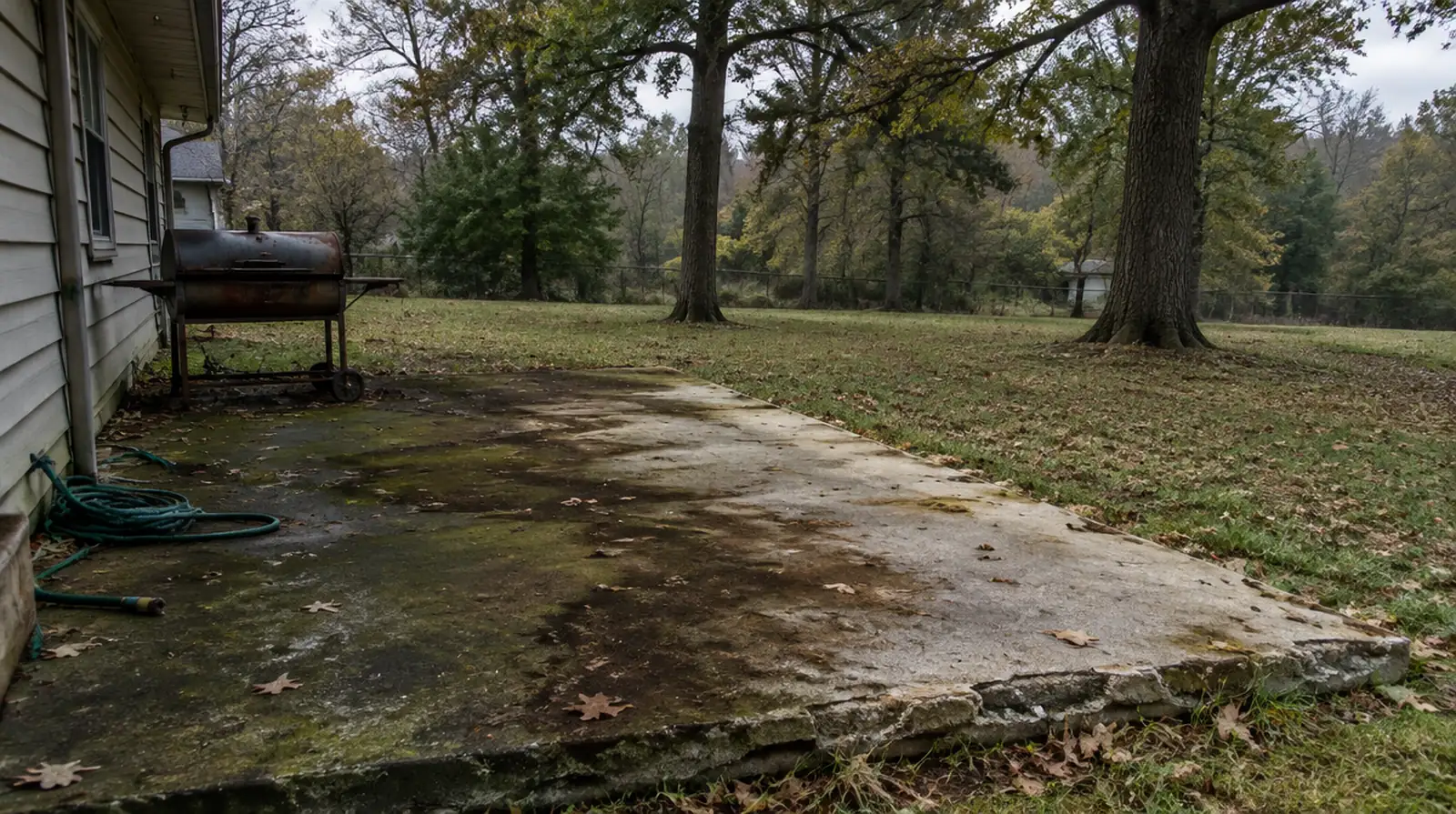
Alma sits where the Boston Mountains start to rise north of the river, and plenty of lots here back up to oak and hickory woods. That shade is welcome in July, but it keeps concrete damp. With our humid summers, damp concrete grows mildew and algae, and fallen leaves leave brown tannin stains that soak in. Patios out in full sun have a different problem: they fade, collect grill grease and get hot by afternoon.
Winter adds its own wear. Most years bring a few hard freezes, and some bring ice. Water that soaks into bare concrete expands when it freezes, and over time that flakes the top layer, especially along patio edges and steps. A good coating keeps that water out of the surface.
Coating options for porches and patios
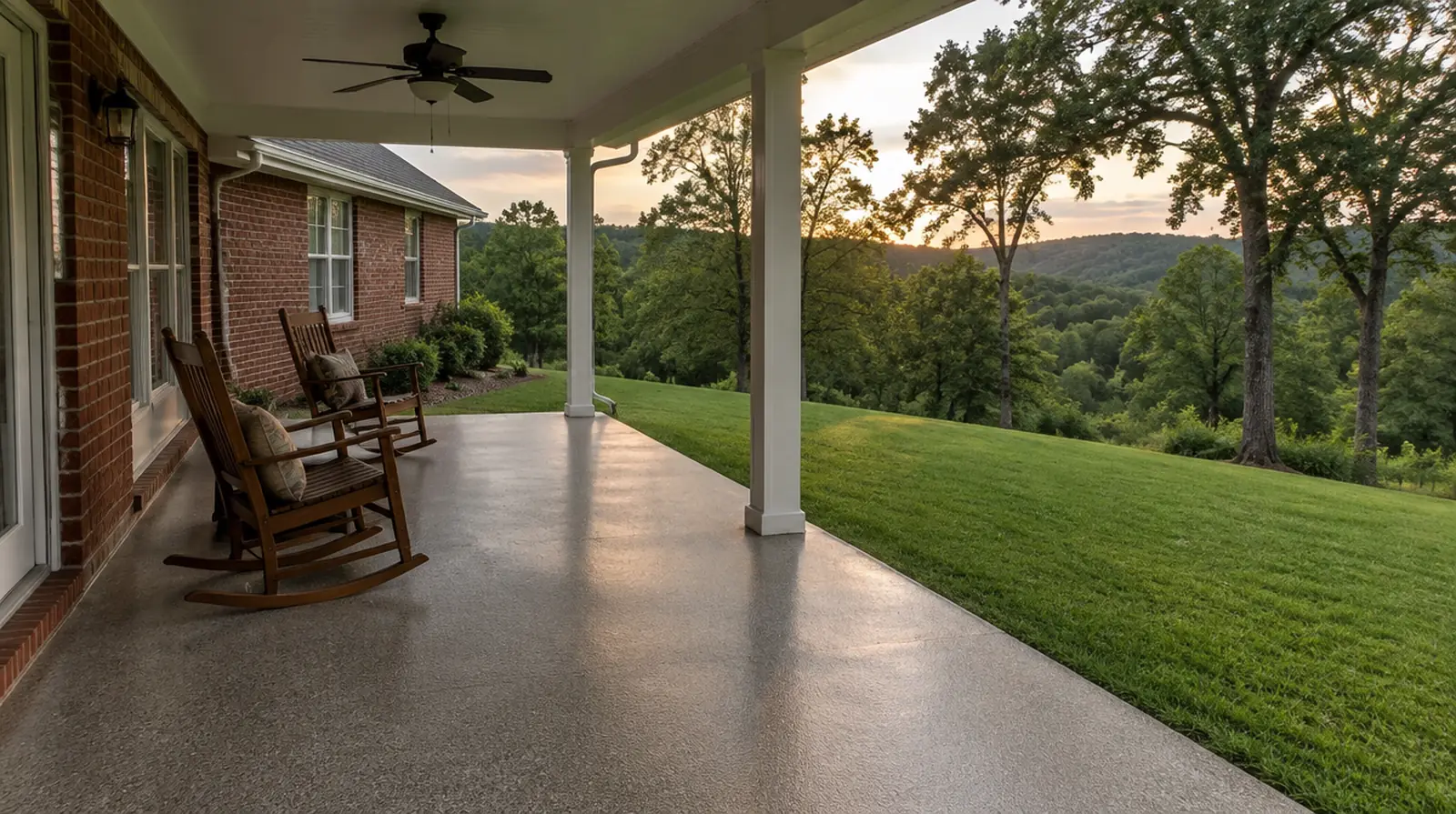
Flake systems. Our most popular choice for covered porches. Colored flakes are broadcast into a base coat and locked under a UV-stable topcoat, like a garage floor built for outdoors. The texture hides dirt and gives good footing. Learn more on our epoxy flake flooring page.
Polyaspartic topcoats. Unlike plain epoxy, which yellows in sunlight, polyaspartic coatings hold their color outdoors and cure fast, so a porch can often be used the next day.
Textured patio coatings. For open patios in full sun, a lighter-colored textured coating keeps the surface cooler and grippy when wet.
Penetrating sealers. If you want the concrete to keep its natural look, a concrete sealer protects against water and stains without changing much of the appearance.
How we prepare and coat
Check the slab. We look at cracks, flaking, how water drains and whether any old paint or sealer is still on the surface. If a patio slopes toward the house, we will point that out before anything else.
Clean and grind. Mildew, grease and tannin stains are cleaned out, then the surface is ground so the coating can bond. Old peeling paint comes off completely.
Repair. Cracks are filled and flaked areas are patched and leveled.
Coat. Base, color and topcoat go down in order, with grit added so the surface is not slick in rain.
Timing in the river valley
Spring and fall are the easiest seasons here, with mild temperatures and lower humidity. Summer jobs start early in the morning to avoid the heat of the day, and we watch for pop-up storms. In winter we wait for a stretch of dry days above the temperature the product needs. Most patios are ready for foot traffic the next day and for furniture in a day or two.
Matching the rest of the house
Many Alma homeowners do the patio and driveway at once, or the patio and pool deck. See our driveway coating and pool deck coating pages. If you have a walkout lower level, ask about basement epoxy flooring too.
Picking colors and texture
Color does more work outdoors than most people expect. Medium grays and warm tans hide pollen, dust and the fine grit that blows onto a porch, while very dark colors show every footprint and soak up afternoon sun. Very light colors stay coolest but show leaf stains more readily in a shady yard. Texture matters too. A finer texture is easier to sweep and feels better barefoot, and a coarser one gives more grip on steps and on the slope where a patio drains toward the lawn. We bring samples to your home so you can see them next to your brick, siding and trim in your own light, because a chip that looks gray indoors can read almost blue in the shade of a big oak.
Common questions
Will mildew grow back on a coated patio? It can still collect on the surface in deep shade, but it rinses off easily instead of staining the concrete.
Can you coat porch steps too? Yes, with extra grit on the treads for safe footing.
Do you work in nearby towns? Yes, including Van Buren, Dyer, Kibler, Mulberry and Cedarville.
Get a patio you want to sit on again
Call (479) 370-4896. Tell us about the patio or porch and send a photo if you can, and we will set up a time to measure and show samples.