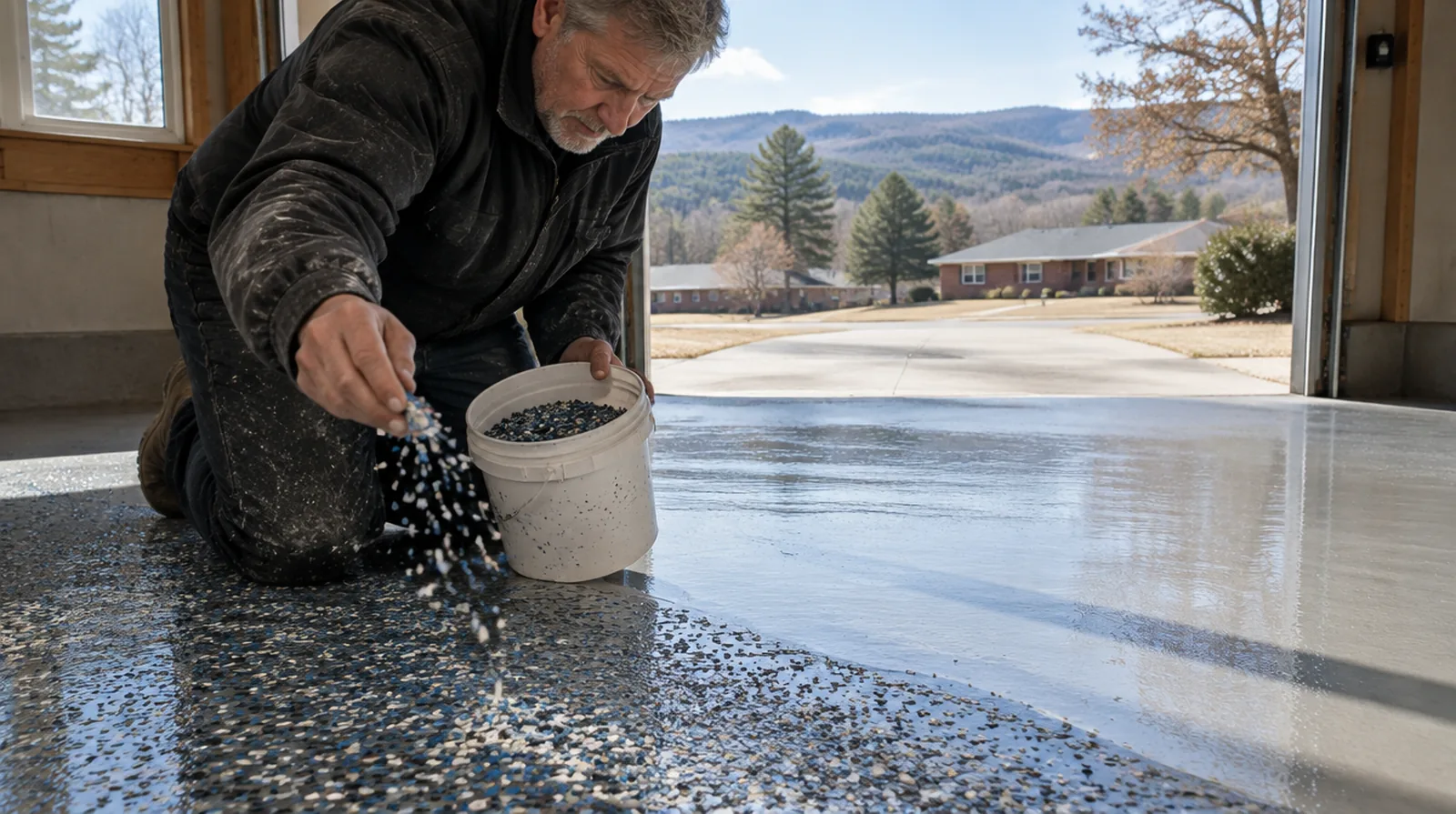
How a flake floor goes down
After grinding and priming, we roll a colored base coat and throw vinyl flake across the whole floor until no base shows. Once it cures, we scrape off the loose chips and seal everything under a clear top.
Picking a blend
Earth-tone and gray blends are the easiest to live with here. They hide dust, grass clippings and the reddish clay that comes in on boots. Lighter blends look sharp but show more.
Grip and texture
The chips leave a slight texture, which helps on a wet floor. We can add a fine grit to the top coat for steps and ramps.
Can flake go over a cracked floor?
Yes. We fill the cracks first, and the flake pattern makes the repair hard to spot.
Is flake good for a shop?
It works well in a home shop. For heavy commercial use, see our business coatings.
Flake in shops and barns
Folks out in the county often ask about flake for a detached shop or equipment barn. It works well on any sound slab with a roof over it. For floors that see welding sparks or heavy steel equipment, we may suggest a thicker body coat under the flake so gouges do not reach the concrete.
What it costs compared to solid color
Flake costs a bit more in material and labor, since we broadcast and then scrape every chip. Many homeowners feel it is worth it because the floor looks clean longer and hides small imperfections in older concrete.
Flake size and Arkansas pollen season
Every spring a yellow film of pine and oak pollen blows into open garages across Alma. A full broadcast of quarter-inch chips hides that dust between washes far better than a solid color. Smaller chips give a tighter, granite look; larger ones read busier and hide more.
How many coats?
A flake floor here is usually a base coat, the chip broadcast, a scrape to knock down loose edges, and one or two clear coats. The second clear coat makes the surface smoother and easier to mop, and we will tell you plainly whether your use calls for it.
Edges and steps
We carry the flake up a few inches onto the stem wall in many garages so water from wet tires does not sit at the seam. Steps into the house can be coated too, with grit in the top for grip.
Flake floors for boat and lake garages
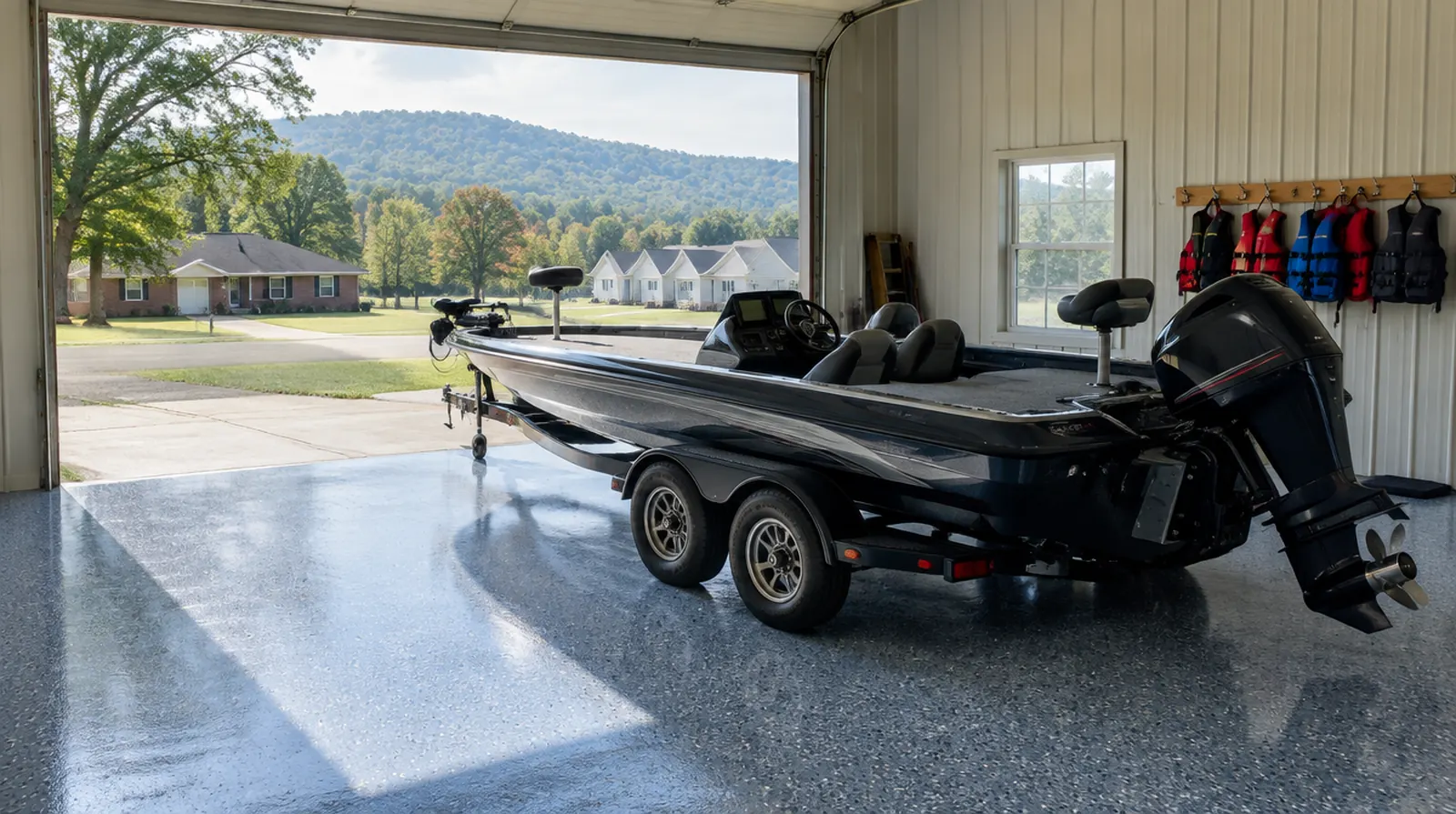
With Lake Fort Smith up the road and the Arkansas River a short drive south, a good number of Alma garages hold a bass boat or a pontoon on a trailer for part of the year. Boats bring their own wear: wet trailer tires, dripping bilge water, fishing line, lead weights and the occasional dropped tackle box. A flake floor like the blue-gray one in the photo handles all of that. The chips add grip when the floor is wet, and a medium blend hides the gray film that river water leaves behind as it dries.
For boat bays we usually suggest a slightly heavier topcoat in the path where the trailer tires roll and turn. It costs a bit more in material but takes the scuffing from jockey wheels and trailer jacks.
Our steps for a chip floor
- Grind, vacuum and fill cracks and joints.
- Roll on a pigmented base coat that roughly matches your chip blend.
- Broadcast chips by hand until the wet base coat is fully covered.
- Let it set, scrape and sweep off the loose chips.
- Roll a clear top coat that locks the chips in and sets the final texture.
Flake questions we hear in Alma
Can I pick a lighter blend if I store a boat?
You can. Lighter blends brighten the space but show dried water spots more. A medium blend with a few light chips is a good compromise.
Is flake easy to sweep?
Yes. A push broom or a dust mop works well, and a hose handles the rest.
If the boat only comes home in summer, we can schedule the floor in early spring while the bay is empty.
Want to see flake samples?
Call (479) 370-4896 and we will bring some by.